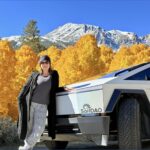
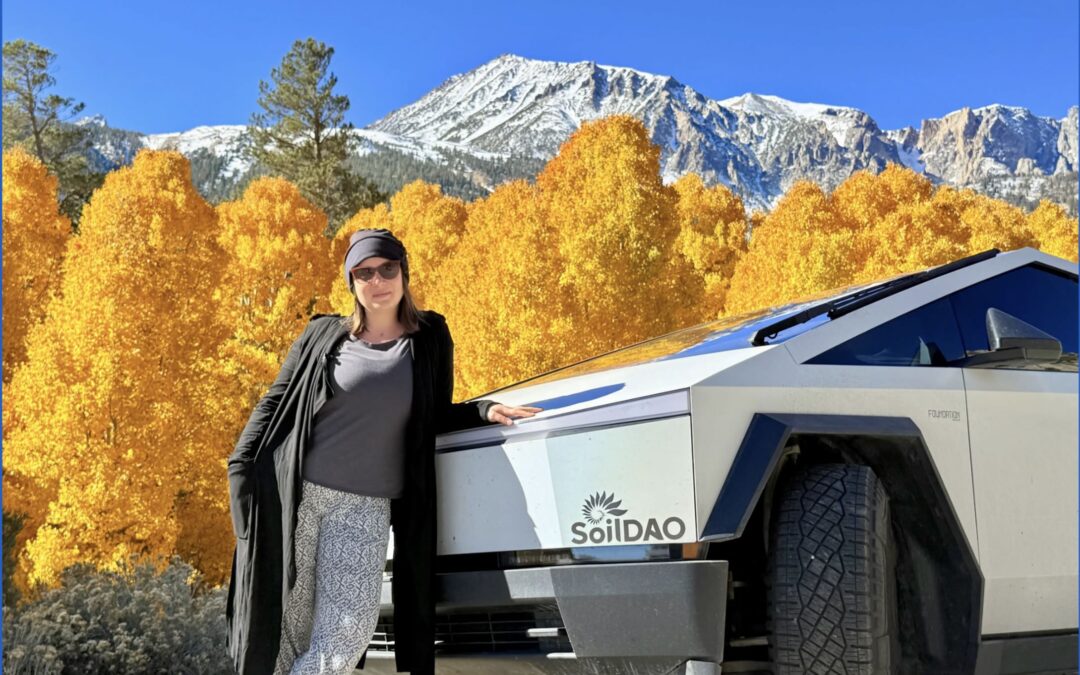
Highway 395, October. My Bulgarian cofounder riding shotgun, both of us quiet. To our left: aspens exploding in gold. To our right: the Eastern Sierra rising like a wall of granite and snow against blue sky so sharp it could cut you. She’d flown 6,000 miles for our first Land Summit, to make sense of this thing we’re building called SoilDAO. I wanted to explain California to her — the magic, the pull, why this place has drawn dreamers west for 200 years. But driving through beauty like this, words feel insulting. You can’t explain it. You can only witness it.
So, California. What is it about this place?
Is it the crystal clear waters of Lake Tahoe?
The roar of the Pacific Ocean?
The fame, fortune, and glamour of Hollywood’s promise?
The unforgiving landscape of the hottest place on Earth?
The tallest trees in the world?
The oldest living organisms on the planet?
The endless outdoor adventures?
The innovation and creativity that’s transforming the world?
Mama Shasta, one of the most mystical places on the planet?
The massive presence of El Capitan?
The wildlife surrounding you everywhere you go?
Oh I know it’s the fact that you can simultaneously feel literally in the middle of nowhere while at the same time you feel in the center of everything?
Or is it simply the name California and what it represents the magic and mystic of going west to look for opportunity and adventure?
And even with all this unimaginable beauty there is something that haunts me: every person who sees California today — every tourist at Yosemite, every driver on Highway 1, every hiker in the redwoods — is looking at the remnants. The leftovers. What we call spectacular today? It’s the ghost of what was. This magic that still draws millions — I’ve been told it’s nothing compared to what existed 200 years ago.
Here’s how the first settlers described what they witnessed. From John Muir in 1912:
“Looking eastward from the summit of Pacheco Pass one shining morning, a landscape was displayed that after all my wanderings still appears as the most beautiful I have ever beheld. At my feet lay the Great Central Valley of California, level and flowery, like a lake of pure sunshine, forty or fifty miles wide, five hundred miles long, one rich furred garden of yellow Compositae. And from the eastern boundary of this vast golden flower-bed rose the mighty Sierra, miles in height, and so gloriously colored and so radiant, it seemed not clothed with light but wholly composed of it, like the wall of some celestial city…. Then it seemed to me that the Sierra should be called, not the Nevada or Snowy Range, but the Range of Light.”
“One is constantly reminded of the infinite lavishness and fertility of Nature — inexhaustible abundance amid what seems enormous waste. And yet when we look into any of her operations that lie within reach of our minds, we learn that no particle of her material is wasted or worn out. It is eternally flowing from use to use, beauty to yet higher beauty…”
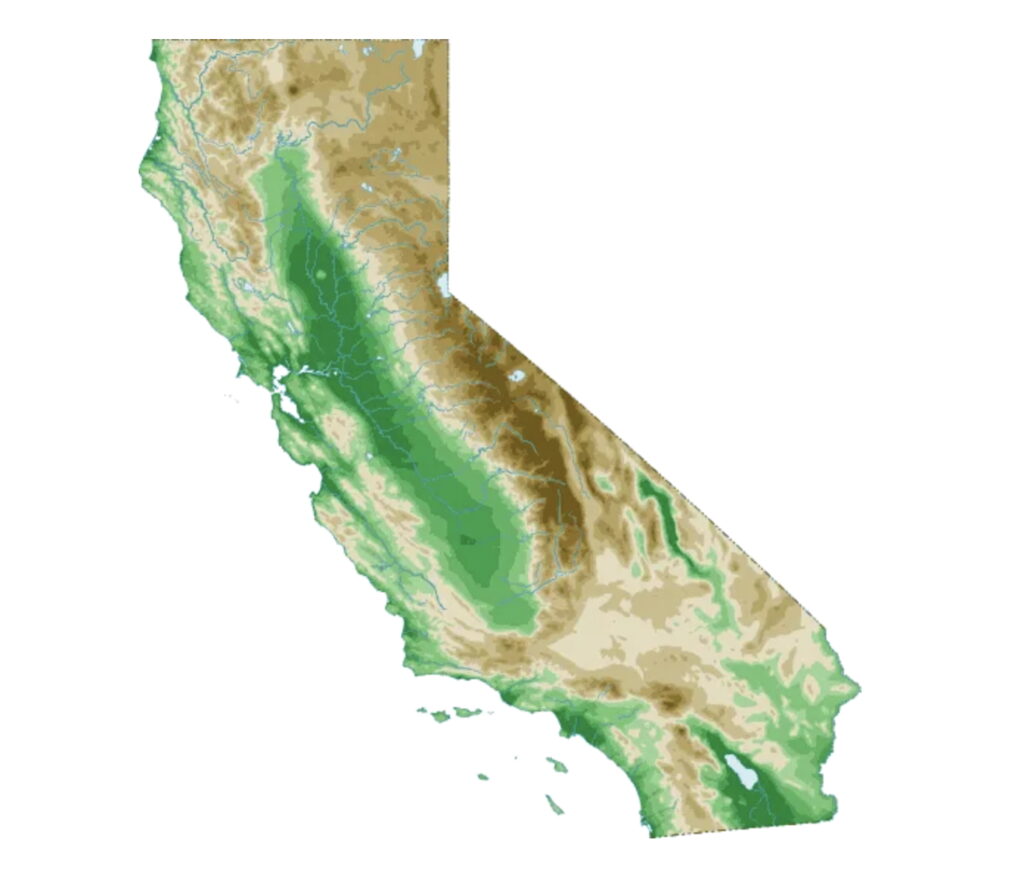
Speaking of this unimaginable beauty of California’s Great Central Valley that Muir described — if you were to drive through it today, you might wonder what the hell he was talking about. The land seems and feels, at best, tired. At worst, highly abused.
The Central Valley is vast — 450 miles long, larger than entire countries. Where I was born in Bulgaria, you can cross the whole country from Romania to Greece in half that distance. The sheer scale of this valley is hard to grasp, and the fertility it once held even harder to imagine. Early settlers called it the Golden Empire because of its rich, fertile soil. It became known as our country’s breadbasket, “The Food Basket of the World.”
I’m not sharing this just to inspire you or paint pretty pictures. I’m sharing this because California’s magic has been systematically dismantled. Let me show you what’s happened to the so-called Food Basket of the World.
The Numbers Don’t Lie:
In less than 200 years, the Central Valley shifted from a wetland-rich ecosystem to an intensively farmed region. The losses are staggering:
Wetlands: Once covering 4 million acres — 30% of the valley — now 90% gone. Only 454,000 acres remain. The Delta has lost half its sediment, 2.5 billion cubic meters, to oxidation and erosion.
Wildlife: Tens of millions of migratory birds once filled these skies. Today, bird populations have declined 33% in just 50 years. Elk populations dropped from 500,000 to less than 6,000. Grizzlies? Extinct since 1924.
Soils: The valley once held alluvial deposits with peat up to 20 meters thick, fed by natural floods. Now? The land has subsided 1 to 8 meters since 1850. We’re losing $3.7 billion annually to soil degradation. Soil organic matter has declined 44% — from 70% to 39% between 1926 and 2006 — and is projected to hit 31% by 2050.
In less than 200 years, we’ve lost what took millennia to build.
Why? The answer isn’t what you think. Before I tell you what went wrong, let me first show you what went right.
Let me share another quote from an 18th-century explorer’s journal:
“About one o’clock in the afternoon we…went over some pretty high hills, with nothing but soil and grass, but the grass all burnt off by the heathens.”
This quote reveals something most people have never heard: California’s richness and abundance isn’t a fluke of nature or simple luck. There’s a keystone species that created all this magic.
A keystone species is an organism that has a disproportionately large impact on its ecosystem relative to its abundance. These species act as the “glue” holding habitats together, influencing biodiversity, community structure, and environmental processes. Without them, ecosystems can drastically change or collapse.
Can you guess what species that is?
Humans.
The human creature is unique on this planet. We are the only species, as far as we know, capable of conscious choice. No other creature can choose to live in or out of integrity with its nature. You don’t have to teach a tiger to be a tiger. You don’t have to teach a bee to pollinate and make honey. They simply do what they do — they can’t choose otherwise.
But what does it mean to be human? We’ve created societies where humans need 12 years of basic education just to survive on this planet — and most of us still live in despair and misery. Meanwhile, a tiger gets zero years of schooling and does tiger things brilliantly.
Here’s the irony: the word “human” comes from humus — the magical substance that makes soil, soil. We are literally named after the earth. Yet we’ve become so disconnected from the soil that we feel alien to this planet.
What’s not philosophy but provable fact is this: humans are a keystone species. The sad part is that lately, we’ve chosen to show up as agents of destruction rather than creation. The data from the Central Valley proves it.
But here’s what most people don’t know: California’s paradise was human-made.
The tallest trees in the world, the oldest living organisms, the most fertile soils, the magical oak savannas — all of this abundance existed because the indigenous peoples who lived here before European contact made a different choice. They chose to live up to the humus root of our name and become true stewards of their land. They consciously and intentionally created paradise on Earth, an abundance so profound we still marvel at its remnants today, even after 200 years of mismanagement.
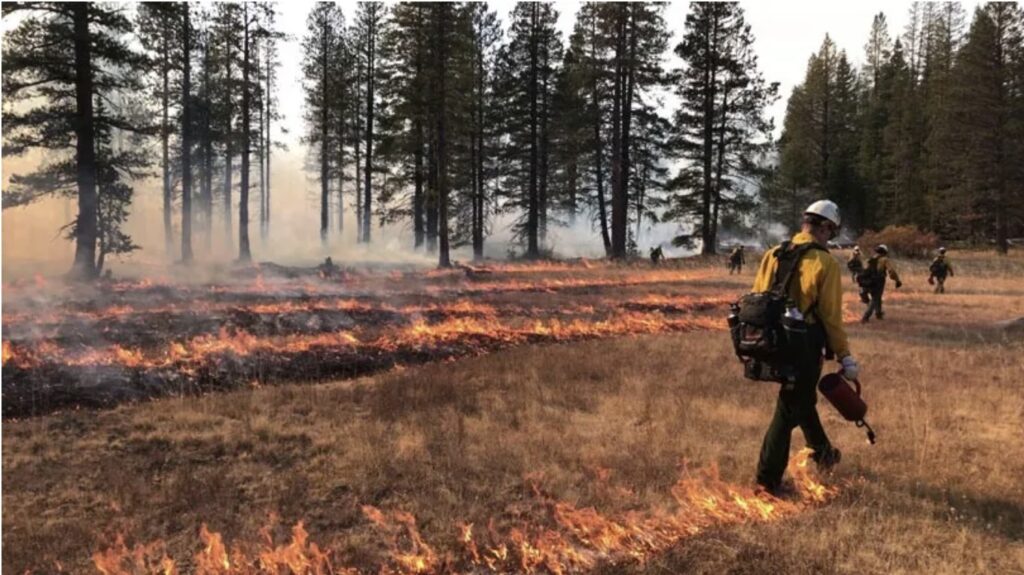
That explorer’s quote about “the grass all burnt off by the heathens”? Those “heathens” were master land managers living in right relationship with the earth. One of their most powerful tools was fire. A small number of people stewarded vast landscapes using controlled burns to enrich the soil and shape the ecosystem.
They didn’t just steward the land — they used fire to grow their temples.
As my friend and teacher Lee Klinger says: “The rest of the world builds their temples. The natives of California grew their temples.”

If you’ve been to California, you might have had the rare privilege of communing with the great mother by sitting inside a tree. Many people see these hollow giants and think, “Oh, this poor tree was destroyed by fire.” But the opposite is true. The original people of this land used fire to shape these magnificent trees, empowering them to grow taller and stronger while creating sacred spaces inside them for ceremony and communion.
The humans of today build tall buildings. The humans of yesterday grew tall trees.
So here we are. A quarter of the way into the 21st century, with more technology, wealth, and knowledge than any civilization in human history. We live in comfort that would make Greek gods envious. And yet, we’re destroying the very ecosystems that give us life.
The question isn’t whether we CAN do things differently. The question is: what would it actually take?
Let’s look at the Central Valley as the asset that it is — objectively, practically. Twelve point eight million acres. Seven million actively farmed, producing 25% of America’s food. Over 250 different crops. The top four agricultural counties in the U.S. are all right here. This land is worth roughly $250–300 billion.
And almost all of it — 6.5 to 7 million acres — is being farmed conventionally: heavy chemicals, monocrops, intensive tillage. Government subsidies keep it profitable. But the soil is dying. Soil organic matter has dropped 44% since 1926. Regenerative farming? Maybe 50,000–100,000 acres. Less than 2% of the total. Why? Because farmers who switch lose their subsidies.
We’re incentivizing seven million acres — the world’s breadbasket — to continue being degraded, poisoned, and eventually desertified.
Central Valley farmland values soared 530% between 2001 and 2021, hitting $52,000/acre — even as soil organic matter declined 44% and the land subsided by meters. The market priced short-term extraction over long-term health. Then in 2024, almond orchard values dropped 50% in areas without reliable water. Soil degradation was always destroying value. The market just couldn’t see it until the water ran out.
Those seven million acres? Worth roughly $175 billion.
You know what else is worth $175 billion? Tether — USDT, the stablecoin. Market cap in 2025: $183 billion.
A financial instrument holding Treasury bonds, doing literally nothing, is worth the same as all the actively farmed land in California’s Central Valley.
And here’s the kicker: Tether made $13 billion in profit in 2024. The Central Valley? $9 billion. While destroying the most valuable asset on this planet — soil.
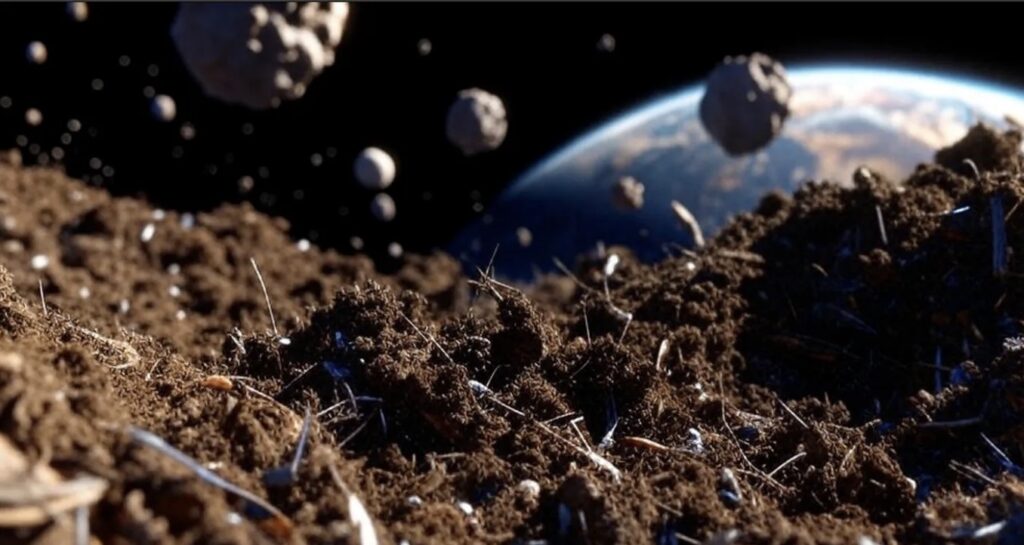
(By the way, soil is literally the rarest resource in the universe. We’ve found gold and diamonds on asteroids and distant planets. But rich, living, fertile soil? As far as we know, it only exists here.)
So where does this end if nothing changes? The land stops being farmland. It becomes real estate. Data centers. Housing developments. Strip mines. Where once stood wetlands rich with biodiversity, tomorrow stands concrete and server farms.
Two hundred more years of this? The Central Valley becomes a dust bowl with data centers on top.
So how do we change this?
Conservation easements seem like an answer — protect the land, prevent development. But here’s the problem: land under a conservation easement loses up to 70% of its value overnight. And we know humans respond to economic incentives. Kill the value, kill the interest. Worse, these easements survive on government grants barely covering basic maintenance, let alone regeneration.
But what if protected land could appreciate in value instead of collapse?
What if there was a way to reward soil health, not soil extraction?
You’ve probably heard of stablecoins. Digital tokens pegged 1:1 to the US dollar, backed by a treasury holding assets — usually Treasury bonds. Tether holds $183 billion in assets, issues $183 billion in tokens, charges minimal fees, and made $13 billion in profit.
Now imagine this: What if instead of T-bills in that treasury, you had land? Seven million acres of protected, regenerative farmland worth $175 billion. A stablecoin backed not by government bonds, but by soil.
Here’s why this changes everything:
Tether made $13 billion holding Treasury bonds. The Central Valley made $9 billion destroying its soil. But here’s the thing — soil isn’t static like bonds. Soil can improve. Organic matter can increase. Water retention can improve. Carbon can be sequestered. Biodiversity can return.
And humans — the keystone species — are the only creatures on Earth that can accelerate that regeneration.
So here’s the model: Protect seven million acres. Back a stablecoin with that land, valued by its soil health, not its extraction potential. Use the revenue to pay farmers and stewards to regenerate the land. As soil health improves, the underlying asset appreciates. The treasury grows. The people doing the work earn a living.

It’s not extraction. It’s appreciation.
What if those billions were put back into the land — incentivizing stewardship, expanding the treasury, scaling the model?
The John Muirs of the future could stand in awe — not just of California’s remnants, but of paradise restored.
And here’s where it gets even bigger.
As the soil regenerates and land value appreciates, we’re not stopping at seven million acres. We’re building the infrastructure to scale this globally — inviting more regenerative farmers, more stewards, more communities to be part of restoring paradise. A few thousand acres here. A few thousand there. Building a circular economy where regeneration becomes profitable, where stewardship creates wealth, where the land itself is the asset that grows.
This isn’t charity. It’s not speculation. It’s a self-sustaining economic engine designed to reward life, not death.
The indigenous peoples of California created paradise with fire and intention. We have blockchain, satellites, AI, and global coordination tools they never dreamed of. We can do this at scale.
None of this is a pipe dream. The technology exists. The economics work. The only question is participation.
Two paths ahead:
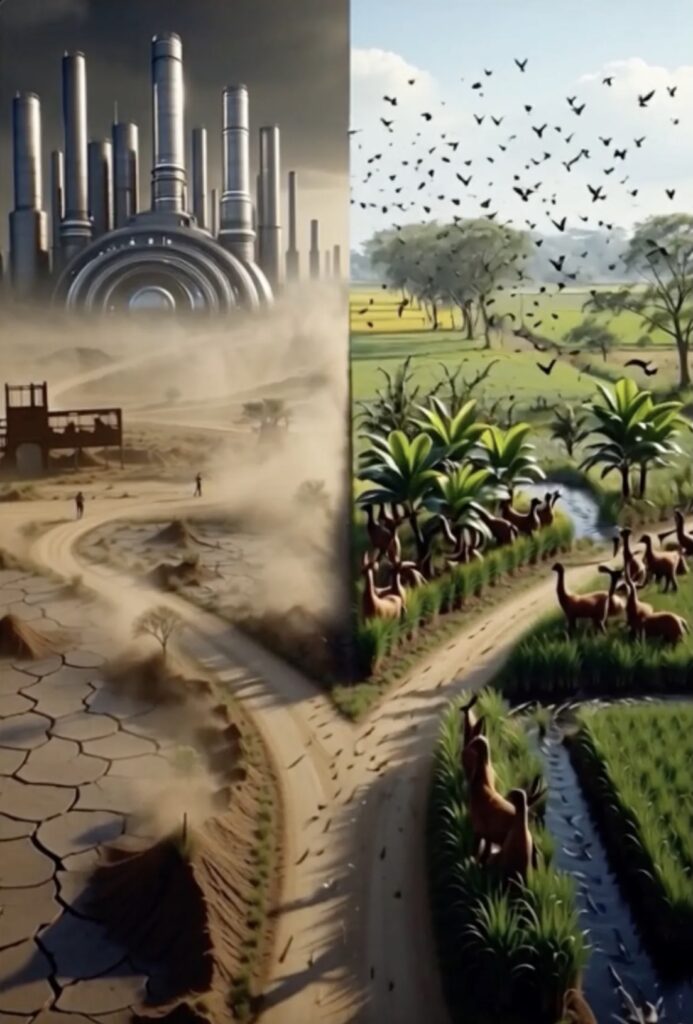
One: We keep measuring extraction. Tether makes $15 billion next year. The Central Valley turns to dust. Data centers rise on dead ground. Two hundred more years of degradation until there’s nothing left.
Two: We measure soil health. Reward regeneration. Protect seven million acres — and eventually hundreds of millions more — in a treasury that grows in value as the soil heals. Farmers earn a living. Communities thrive. Paradise returns.
The choice isn’t made by governments or corporations. It’s made by participation.
California was paradise once. It can be again.
Are you ready to grow temples instead of building them?
Join us.

AUTHOR
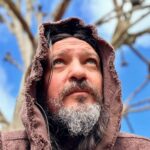
Hristiyan Atanasov
Hristiyan, founder of Artisanov Construction Inc. and an internationally recognized leadership coach, blends meditation, spirituality, and advanced facilitation techniques to foster self-empowerment. His passion for Web3 technologies, especially their application in real-world projects like regenerative agriculture, led to the creation of Soil Dao.